

You have an outdated webbrowser. The website might not work correctly.
A cut-resistant glove reduces the risk of cuts while working with a sharp knife. It is worn on the hand with which you hold the product. The glove is made from tightly packed fibres that protect against cuts. Do you work with oysters or other shellfish? Then choose an oyster glove with metal rings in a chainmail pattern. This protects you against slipping and punctures from an oyster knife.
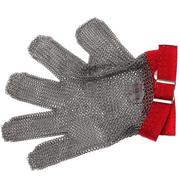

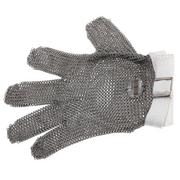

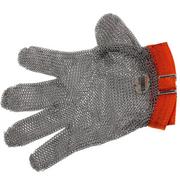


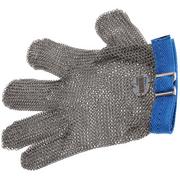


There are two types of protective gloves for cutting tasks: the cut-resistant glove and the oyster glove. The difference lies in the application: a cut-resistant glove protects against cuts, whereas an oyster glove protects against punctures.
A cut-resistant glove reduces the risk of cuts while working with sharp knives. It is worn on the hand with which you hold the product. These gloves are made from tightly packed fibres that protect your hand against cuts. They are ideal for cutting vegetables, meat or, for example, using a mandoline. The glove protects you against cuts, but please note: it is not resistant to punctures!
Do you work with oysters or other shellfish? Then choose an oyster glove. This is made from metal rings in a chainmail pattern and protects your hand against punctures, for example from an oyster knife. If you slip while using an oyster knife, the rings catch the tip and distribute the pressure, preventing the knife from piercing the glove and keeping your hand protected.

