
You have an outdated webbrowser. The website might not work correctly.
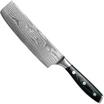
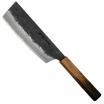
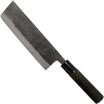
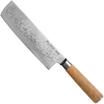
A nakiri is a traditional Japanese vegetable knife. In Japan, vegetable knives are known as nakiri (double-bevel) or usuba (single-bevel). You can recognise a nakiri by its rectangular blade shape. The blade is almost straight and does not end in a sharp point. This ensures that the cutting edge remains as long and straight as possible, making it easy to finely chop or cut carrots, cucumbers, cabbage and other vegetables into straight pieces. Chopping herbs precisely is no problem at all either.
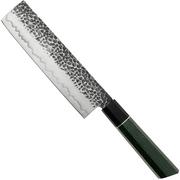

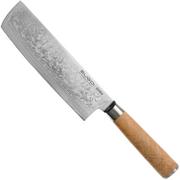

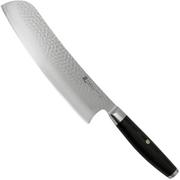


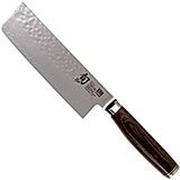

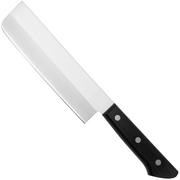

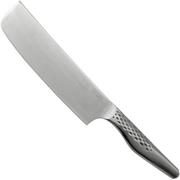

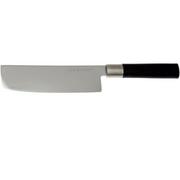

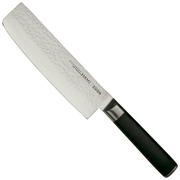

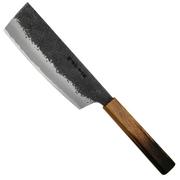


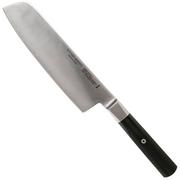

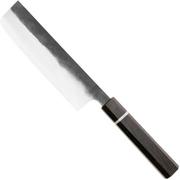

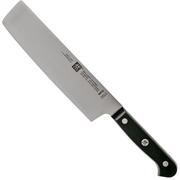


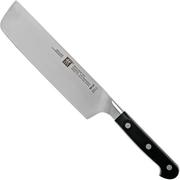

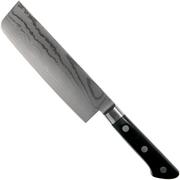

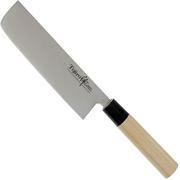

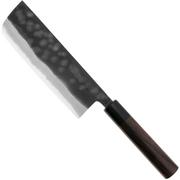


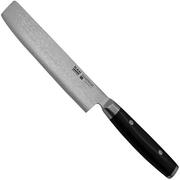


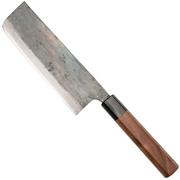

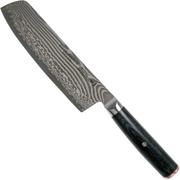

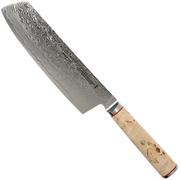


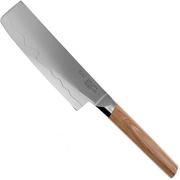

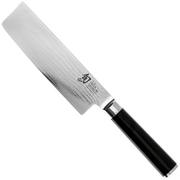

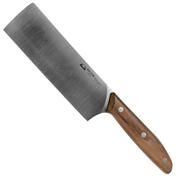

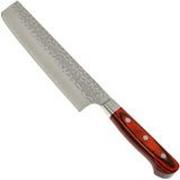

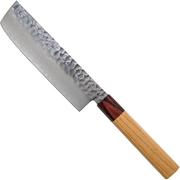

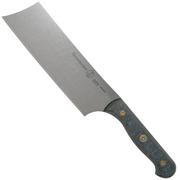


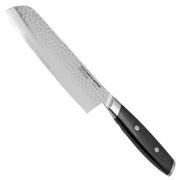

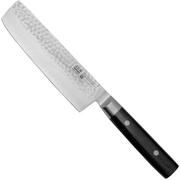


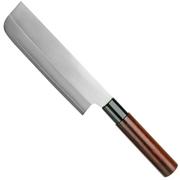

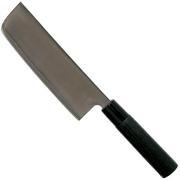

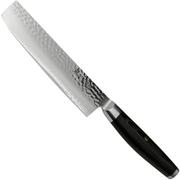

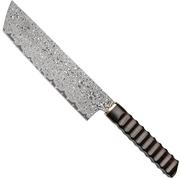


You can recognise a nakiri knife by its straight blade and long, almost straight cutting edge. Like many Japanese knives, a nakiri is thinly ground and razor-sharp, but it is its straight shape in particular that makes it ideal for precise and controlled cutting. Most nakiri knives are double-bevel and suitable for both left- and right-handed users. A single-bevel vegetable knife is usually called an usuba: even more precise, but also more technical to use and more difficult to sharpen properly yourself.
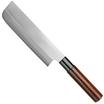
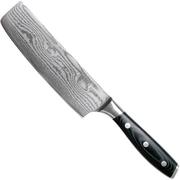
Nakiri kives tend to look very similar. The blade shape and blade length don't tend to differ much. However, one thing to look out for is the type of handle. You can choose between a Western-style handle or a traditional Wa-style handle. The latter is typically Japanese and is often oval, octagonal or D-shaped. Wa-handles are lightweight, making the knife easy to handle. A Western-style handle is often rounder, larger and heavier. Which suits you best depends mainly on what you find attractive and comfortable to hold.
Japanese vegetable knives are designed for precise and effortless cutting. The best-known is the nakiri, with a wide blade and a long, straight cutting edge. The usuba is also a true vegetable knife, particularly suited to fine chopping. Check out all vegetable knives. In addition, a santoku, bunka or gyuto can easily be used for vegetables, as well as for meat and fish. Do you cook with fish a lot? If so, why not take a look at the Japanese deba knives.
A damascus nakiri knife is a premium kitchen knife that stands out for its striking appearance. If you're looking for a premium nakiri knife for vegetables, a damascus model is an excellent choice. The beautiful damascus patterns are a real highlight in any kitchen. In our range, you’ll find damascus nakiri knives from renowned brands such as Eden, Tojiro, and Sakai Takayuki.
A nakiri is a traditional Japanese vegetable knife with a rectangular blade, specially designed for cutting vegetables and chopping herbs. A santoku is a versatile Japanese kitchen knife designed for cutting meat, fish and vegetables. If you want one knife for a variety of ingredients, choose a santoku. If you mainly prepare vegetables, a nakiri is the better choice.
Both have a distinctive blade shape, which is very similar. The difference between the two knives lies in the way they are sharpened. While a nakiri is sharpened on both sides, the usuba is only sharpened on one side.
A nakiri knife and a chef's knife are both versatile kitchen tools, but they are designed for different tasks. A nakiri knife is a Japanese vegetable knife with a straight blade that allows the entire edge to contact the cutting board, making it ideal for precise slicing, dicing, and chopping of vegetables. A chef's knife, on the other hand, has a curved blade that supports a rocking cutting motion. It is an all-purpose knife suitable for vegetables, herbs, meat, and fish. If you mainly prepare vegetables, a nakiri knife offers excellent control and clean cuts. For a wider range of kitchen tasks, a chef's knife is the more versatile choice
Can’t find what you’re looking for? View all Japanese knives here.